
6 Kids Balance Stepping Stones: Games, Safety & Setup
6PCS Children’s Balance Stepping Stones for Active Play
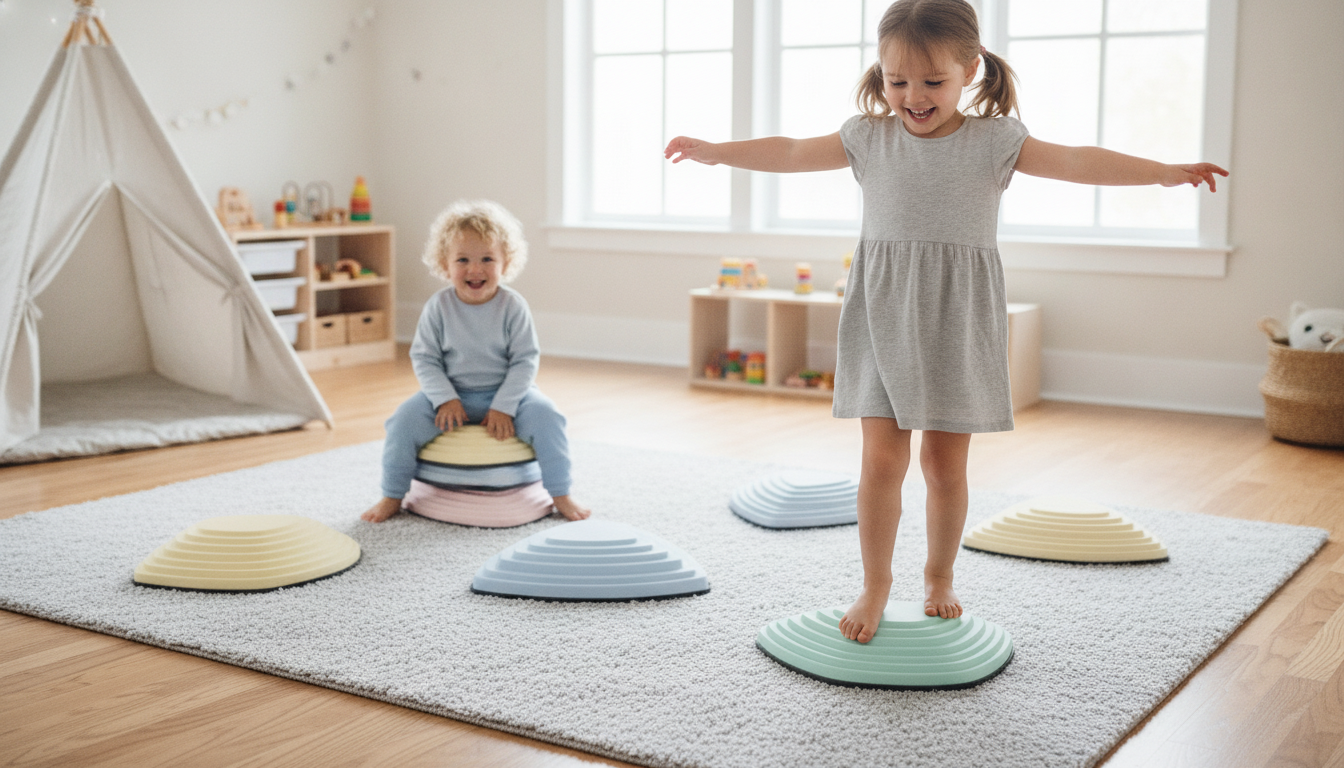
Balance stepping stones can turn a living room, backyard, or classroom corner into a simple obstacle course that encourages movement, coordination, and confident stepping. A 6-piece set is especially handy for quick setup and open-ended games—from “river crossing” to color-based challenges—while supporting gross motor practice through play. If you’re building a screen-free activity rotation, the 6PCS Children’s Balance Stepping Stones make it easy to reset the course in minutes and keep kids engaged with new routes and rules.
What these stepping stones are made for
- Create quick obstacle-course routes indoors or outdoors without complicated assembly.
- Support gross motor development through stepping, balancing, hopping, and controlled landing.
- Encourage imaginative games like “lava floor,” “jungle trail,” or “rescue mission” paths.
- Offer flexible difficulty: place stones close for beginners or farther apart for more advanced play.
Because the gameplay is flexible, children can practice the same path for mastery or redesign it repeatedly for novelty. That mix of repetition and creativity is a big reason stepping-stone play fits so well into daily movement breaks and active playtime.
At-a-glance details
- Set includes 6 stepping stones for building varied paths and patterns.
- Works well as a standalone activity or as part of a larger movement circuit (cones, tunnels, jump rope).
- Suitable for home playrooms, therapy-style movement breaks, preschools, and daycare spaces.
| Feature | What it means for play | Simple tip |
|---|---|---|
| 6-piece set | Enough pieces for short routes or stations | Start with 3 stones in a straight line, then add curves |
| Flexible spacing | Adjust challenge level by distance and angles | Use heel-to-toe steps for easier routes; wide gaps for jumping |
| Indoor/outdoor use | Move the course to match the day’s energy | On hard floors, set up in a clear area and keep socks grippy |
| Open-ended gameplay | Kids can invent rules and scenarios | Assign missions: “carry a toy across without dropping it” |
Benefits for growing bodies and brains
- Balance and coordination: stepping from stone to stone encourages controlled weight shifting and body awareness.
- Core and lower-body engagement: holding steady posture supports stability and careful foot placement.
- Planning and focus: choosing the next step builds simple problem-solving and attention skills.
- Confidence through repetition: routes can be repeated and improved, helping children feel capable as challenges increase.
Active play is more than “burning energy.” Health organizations consistently highlight movement and play as essential parts of childhood development and overall wellness. For broader guidance on how activity supports healthy growth, see the Centers for Disease Control and Prevention: Physical Activity Basics and the American Academy of Pediatrics’ perspective on development in The Power of Play.
Games and activities to try (no extra equipment required)
- River Crossing: stones are “safe islands”; stepping on the floor means starting over.
- Color Callout: call a color and have the child step to that stone next (add clapping or a gentle turn to increase challenge).
- Treasure Delivery: carry a soft toy from start to finish without stepping off the stones.
- Slow-Motion Trail: move as slowly as possible while keeping balance; great for control and focus.
- Animal Walk Start: approach each stone with an “animal walk” (bear crawl, crab walk), then step up carefully.
To keep play fresh with the same six pieces, rotate the “rule” rather than the layout: whisper-only crossings, one-foot pauses, or “freeze” holds on every other stone. Small changes like these can make a familiar setup feel new.
Placement and safety basics
- Clear the area: move small furniture, sharp-edged items, and slippery rugs away from the course.
- Match the route to the child: beginners do best with close spacing and a simple straight line before adding curves and gaps.
- Supervise active play: especially when adding jumping, speed challenges, or carrying objects.
- Choose the right surface: a flat, stable area helps children focus on balance instead of uneven footing.
- Create a “stop zone”: mark a finish area where kids slow down and step off safely.
For indoor setups, consider your “edges” as much as the route. A course placed away from tables, hearths, or tight hallways gives children room to wobble safely while they learn to control their landing.
Who it’s great for
- Active kids who enjoy movement games and obstacle courses.
- Rainy-day indoor play when outdoor time is limited.
- Families looking for screen-free activities that can be reset in minutes.
- Classrooms, daycare settings, or movement corners that benefit from quick, repeatable stations.
If your space doubles as both play area and sleep area, pairing active-play tools with kid-friendly room features can make routines easier. For example, a bed that adds built-in movement and fun can complement obstacle-course play during the day, such as a Twin Over Twin Bunk Bed with Slide and Ladder in a shared room setup.
Ideas for building a simple movement circuit
For households with multiple ages, run the circuit in “levels.” Younger kids can walk the straight-line version, while older kids try diagonals, longer gaps, or a careful carry challenge. The same 6PCS Children’s Balance Stepping Stones set can adapt to both without needing extra gear.
FAQ
Can balance stepping stones be used indoors?
Yes. Set them up on a clear, flat area away from sharp corners or breakable items, and supervise more active rounds like jumping or speed games.
How far apart should the stones be placed?
Start close enough for comfortable stepping, then widen the gaps gradually as balance and confidence improve. Adjust spacing based on the child’s height, stride, and skill level.
What are easy games to play with a 6-piece set?
Try “river crossing,” color callouts, slow-motion stepping, or carrying a soft toy across without stepping off. These games stay fun even when you repeat the same layout because the rules can change each round.














Leave a comment