
Low Twin Over Twin Bunk Bed for Kids: Safer Ladder Sleep
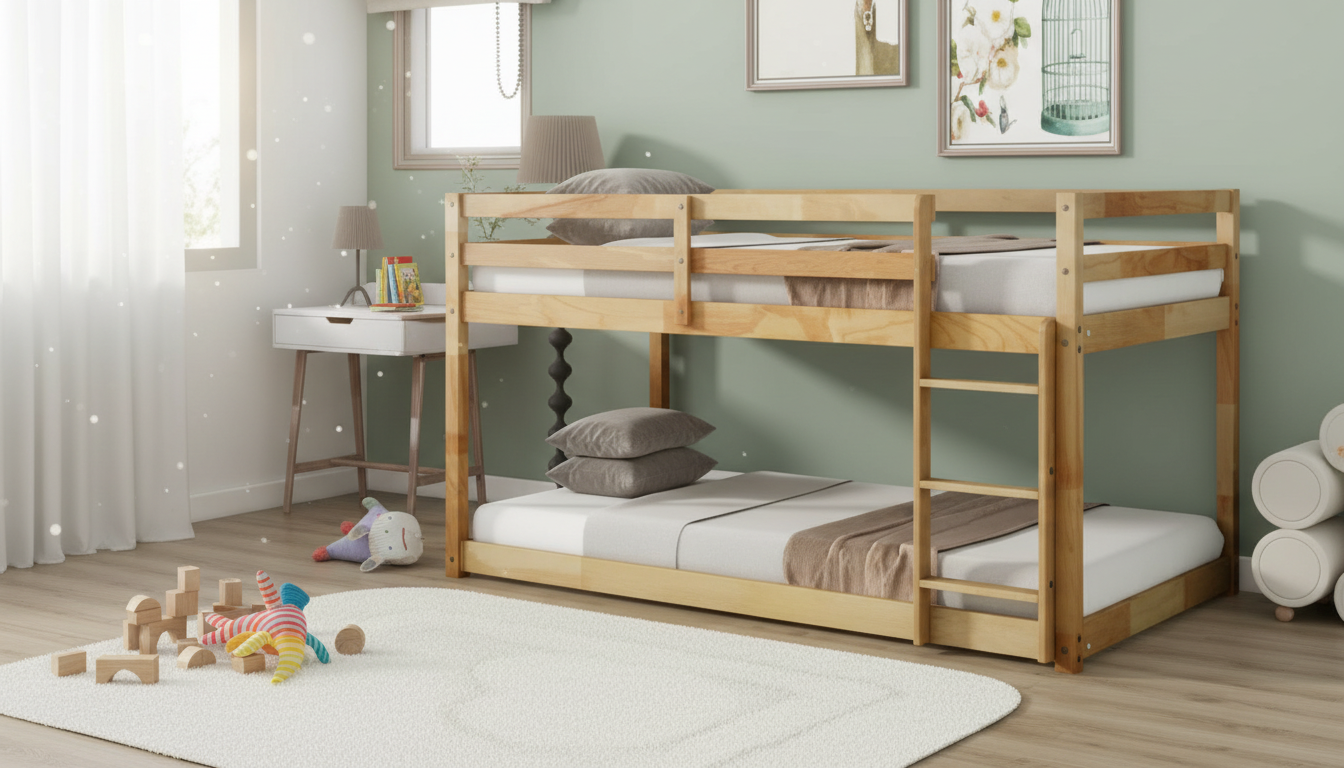
Twin Over Twin Low Bunk Bed with Ladder and Guardrails for Kids: A Safer, Space-Smart Sleep Setup
A low bunk bed keeps the top bunk closer to the floor while still freeing up floor space compared with two separate beds. With built-in guardrails and a dedicated ladder, this style can better support nightly routines, shared bedrooms, and growing kids—while helping caregivers feel more confident about access and fall protection.
What Makes a Low Bunk Bed Different
Low bunk beds are designed around a simple idea: keep the same two-bed footprint advantage of bunks, but reduce the overall height. That one change can make a shared room feel calmer and more manageable—especially during the “one more story” phase of bedtime.
- Lower overall height can reduce the severity of falls and make bedtime feel less intimidating for younger sleepers.
- Easier linen changes and bedtime check-ins due to shorter reach to the top bunk.
- Often fits better in rooms with standard or lower ceilings, helping maintain comfortable head clearance.
- Maintains the benefits of bunking—two sleep surfaces with a smaller footprint than two separate twin beds.
For families trying to balance safety concerns with the reality of small bedrooms, a low-profile design is often the most “middle ground” option: still fun, still space-saving, but less towering.
Safety Features That Matter: Guardrails and Ladder Design
Any bunk bed should be treated like a piece of equipment, not just furniture. Guardrails, ladder stability, and correct mattress fit do the heavy lifting for safer sleep—while rules and supervision handle the rest. For additional guidance, review the CPSC bunk bed safety tips and the American Academy of Pediatrics bunk bed guidance.
- Full-length guardrails on the top bunk help reduce the risk of rolling out during sleep; verify the guardrail spans the open side and that there are no large gaps.
- A stable ladder should feel secure under load and provide consistent hand/foot placement; check for firm attachment points and non-wobbly steps.
- Look for smooth edges and well-finished surfaces to reduce scrapes during climbing and play.
- Confirm the bed is used with the correct mattress size and thickness so the guardrails remain effective.
Quick safety checklist before the first night
| Item to check | What to look for | Why it matters |
|---|---|---|
| Guardrails | Top bunk has continuous guardrails on open sides; no loose hardware | Helps prevent falls during sleep |
| Ladder stability | No wobble; steps are evenly spaced; secure attachment | Safer climbs up and down |
| Fasteners | All bolts/screws tightened after assembly; recheck after 1–2 weeks | Prevents squeaks and shifting |
| Mattress fit | Twin mattress sits below guardrail height; no sliding | Maintains fall protection |
| Clear zone | No cords, shelves, or ceiling fans near the top bunk | Reduces snag and impact hazards |
Many bunk beds sold in the U.S. are designed with established safety specifications in mind; if you want to go deeper into technical requirements, ASTM’s consumer bunk bed standard (ASTM F1427) is a common reference point: ASTM F1427.
Room Fit and Layout Tips for Shared Bedrooms
A bunk bed can instantly “open” a room—until the ladder ends up blocking a closet or forcing kids to squeeze between furniture in the dark. A few layout choices help the bed function smoothly day after day.
- Measure the wall length and ensure enough space for ladder access without blocking doors, closets, or HVAC vents.
- Plan a clear nighttime pathway (especially to the bathroom) so kids are not stepping around toys near the ladder.
- Use a rug with a non-slip pad near the ladder landing area to cushion steps while keeping traction.
- Keep lighting simple: a low-glare nightlight can support safer climbing without overstimulating bedtime.
If the room doubles as a play space, designate a “no-build zone” around the ladder area—no bins, no building sets, no stuffed animal piles. That one boundary reduces the most common trip hazards.
Everyday Comfort and Durability Considerations
Comfort isn’t just the mattress—it’s how steady the bed feels, how quiet it stays when someone shifts at night, and how easy it is to keep routines consistent when two kids share one room.
Product Spotlight: Twin Over Twin Low Bunk Bed with Ladder and Guardrails for Kids
If the goal is to maximize floor space while keeping the top bunk easier to access, the Twin Over Twin Low Bunk Bed with Ladder and Guardrails for Kids is built around that low-profile advantage. It’s designed to provide two twin sleep surfaces with a compact footprint, plus a ladder and guardrails intended to add reassurance for nighttime movement on the top bunk.
At-a-glance details
| Detail | Value |
|---|---|
| Product | Twin Over Twin Low Bunk Bed with Ladder and Guardrails for Kids |
| Price | 313.82 USD |
| Availability | In stock |
Who This Style Works Best For
A Fun Alternative: Bunk Bed with Slide (When Play Space Is a Priority)
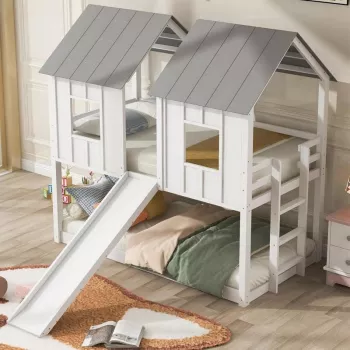
When the layout allows it, the Twin Over Twin Bunk Bed with Slide and Ladder can be a strong fit for kids who love movement—while still keeping a shared bedroom organized around one main furniture footprint.
FAQ
What age is appropriate for the top bunk?
Many widely cited safety recommendations advise that children under 6 should not sleep on the top bunk. Follow the manufacturer’s instructions, set clear climbing rules, and supervise until kids consistently use the ladder safely.
Do guardrails work with any twin mattress?
No—mattress thickness and fit matter because the mattress should not sit too high relative to the guardrail. Use the stated mattress requirements for the bed, and confirm the mattress doesn’t reduce the effective height of the guardrail.
How often should a bunk bed be re-tightened after assembly?
Recheck and tighten hardware after the first 1–2 weeks, then inspect monthly (or at least seasonally). Regular use, movement, and play can slowly loosen fasteners over time.













Leave a comment