

Trust Smart: 6 Checks to Verify AI Answers Fast
Trust Smart: A Practical Guide to Checking AI Answers Before Acting on Them
AI can speed up research, drafting, and decision-making—but it can also sound confident while being wrong, incomplete, or unsafe. A reliable approach is to treat AI like a fast assistant: useful for producing options, summaries, and structure, but not automatically a final authority. The goal is a simple, repeatable routine: clarify what the AI is claiming, verify what matters, and escalate when the stakes are high.
When AI Sounds Right but Isn’t: Common Failure Modes
Most bad outcomes come from a small set of predictable failure modes. Learning to spot them early saves time and prevents costly mistakes.
- Hallucinations: invented facts, citations, or quotes that do not exist.
- Stale knowledge and missing context: answers may not reflect current rules, pricing, policies, or local requirements.
- Overgeneralization: advice that ignores edge cases, constraints, or your specific situation.
- Misleading certainty: confident tone without evidence, data, or clear reasoning.
- Hidden assumptions: it may assume location, timeframe, definitions, or goals you never stated.
- Safety and compliance risks: medical, legal, financial, cybersecurity, and self-harm areas require higher scrutiny and often human oversight.
If you’re building a habit of safer AI use, it helps to anchor your checks to recognized guidance like the NIST AI Risk Management Framework (AI RMF 1.0) and the OECD AI Principles, both of which emphasize transparency, risk management, and accountability.
A Quick Trust Check: The 6 Questions to Ask Before Using an AI Answer
Before copying, buying, sending, or implementing, run this six-question scan. It takes two minutes and catches most problems.
- What is the claim, exactly? Restate the answer as testable statements (numbers, dates, steps, requirements).
- What evidence supports it? Look for sources, references, or reasoning that can be checked.
- What assumptions is it making? Ask it to list assumptions about inputs, definitions, locale, timeframe, and constraints.
- What could change the conclusion? Identify conditions where the advice would differ (jurisdiction, age, device, budget, risk tolerance).
- What are the risks of being wrong? Rate impact (low/medium/high) and choose a verification level to match.
- What is the next best verification step? Decide whether to cross-check with primary sources, experts, or real-world tests.
Trust level checklist (match verification effort to risk)
| Risk if wrong | Typical examples | Minimum verification | Green flags in the answer | Red flags to pause |
|---|---|---|---|---|
| Low | Brainstorming, rewriting, general explanations | Quick sanity check and spot-test one claim | Clear definitions; acknowledges uncertainty; offers alternatives | Overconfident tone; no caveats; contradicts basic facts |
| Medium | Purchase decisions, workplace policies, technical setup | Cross-check with 2 independent sources; confirm versions/locale | Cites primary docs; asks clarifying questions; includes constraints | Vague steps; missing prerequisites; fake-looking citations |
| High | Medical, legal, taxes, security, safety-critical actions | Use authoritative primary sources and/or a qualified professional | Strong warnings; encourages professional review; provides conservative options | Tells you to skip professionals; urges urgency; provides exploit-like steps |
Safety Checks That Catch Most Bad Answers
- Source audit: verify any cited links, standards, laws, or studies; treat uncited claims as unverified.
- Consistency test: ask the same question in a different way; compare for contradictions or moving goalposts.
- Edge-case probe: ask for counterexamples, failure cases, and scenarios where the guidance does not apply.
- Numbers check: confirm units, conversions, ranges, and baselines; watch for impossible values and rounded “nice” numbers.
- Reproducibility: for technical steps, require exact versions, prerequisites, and a rollback plan.
- Bias and fairness scan: ask who could be harmed by the recommendation and whether alternatives exist.
- Privacy check: remove sensitive data; ask for a safer approach that minimizes personal information.
For consumer and business-facing claims, the Federal Trade Commission’s guidance on AI and truthfulness is a helpful reminder: if a statement would need proof in a normal context, it needs proof when AI says it too.
Critical Thinking Prompts That Improve Reliability
When an answer matters, don’t just ask for “more detail.” Ask for structure that exposes weak points.
High-Stakes Use: When to Stop and Escalate
Make It a Habit: A Simple Workflow for Daily AI Use
A Structured Companion for Smarter AI Decisions
For a ready-to-use set of questions, safety checks, and decision templates, Trust Smart ebook guide for evaluating AI responses organizes these concepts into practical pages that can be reused across work, school, and everyday tasks.
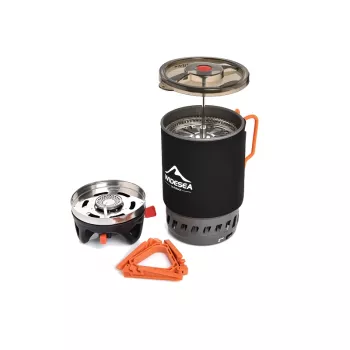
If you’re practicing verification through real-world buying decisions, it can help to run the same “claim → evidence → assumptions → risk” loop on product specs and compatibility notes. Two items that work well for “medium-risk” verification practice are the portable camping cooking system with heat exchanger and gas stove (fuel type, output, and safety steps are easy to cross-check) and 925 sterling silver multicolor birthstone clip earrings (materials, sizing, and care instructions are straightforward to confirm).
FAQ
How can an AI answer be wrong even when it sounds confident?
Language models are optimized to produce plausible text, not guaranteed truth, so they can invent details, miss context, or present uncertainty poorly. For anything important, treat the response as a draft and verify key claims using primary sources or trusted experts.
What is the fastest way to verify an AI claim?
Extract 1–3 concrete claims (a number, requirement, or step) and check them against an authoritative primary source. If time allows, add a quick consistency check by re-asking the question and probing one edge case, then scale verification effort to the risk if you’re wrong.
When should AI not be used as the final authority?
Don’t use AI as the final authority for medical, legal, tax, security, or safety-critical decisions. In those cases, escalate to official documentation and/or a qualified professional, and use AI only to organize questions or summarize materials you already trust.














Leave a comment