

Strengths and Weaknesses: 90-Minute Self-Discovery Plan

Identify Strengths and Overcome Weaknesses: A Practical Self-Discovery Plan
Clear strengths make decisions easier, and clear weaknesses make growth faster. The challenge is getting beyond vague labels and one-time tests to something you can actually use on Monday morning. Below is a structured, evidence-based way to uncover what you do best, pinpoint what holds you back, and turn both into a simple plan for work, learning, and daily life.
What “strengths” and “weaknesses” really mean (and what they don’t)
Strengths aren’t just things you enjoy, and weaknesses aren’t character flaws. Think of both as repeatable patterns you can observe and influence.
- Strengths are repeatable patterns that create value: skills, behaviors, and ways of thinking that reliably produce good outcomes.
- Weaknesses are patterns that increase friction or risk: blind spots, skill gaps, or habits that reduce results or strain relationships.
- Separate skill (trainable) from trait (tendency) to avoid fixed-mindset labeling.
- Use evidence over identity statements: shift from “I’m bad at…” to “My current approach leads to…”
- Focus on context: a “strength” in one role can become a “weakness” in another (speed vs. accuracy, independence vs. collaboration).
This approach aligns well with what research calls self-efficacy—your belief that you can influence outcomes through action—an important driver of behavior change (see the American Psychological Association overview).
A 90-minute self-discovery sprint to uncover real strengths
This sprint creates an initial “map” of strengths using real moments, not abstract adjectives.
Step 1 (10 minutes): Collect high points
List 5–10 high points from the last year—moments with energy, ease, or strong outcomes. Include work wins, school projects, volunteer moments, or personal goals.
Step 2 (15 minutes): Write the facts
For each high point, note: what the goal was, what actions you took, and what others relied on you for (clarity, speed, empathy, structure, troubleshooting, etc.).
Step 3 (15 minutes): Highlight recurring patterns
Step 4 (10 minutes): Identify conditions that unlock performance
Step 5 (20 minutes): Get three outside examples
Ask 3 people for one specific example of when you were at your best. Request behaviors, not compliments. If you want a framework for these prompts and a place to store the results, the Identify Strengths and Overcome Weaknesses: Digital Self-Discovery eBook can help keep the process consistent across weeks instead of scattered across notes.
Step 6 (20 minutes): Turn patterns into strength statements
How to spot weaknesses without self-criticism
- Look for recurring costs: missed deadlines, repeated misunderstandings, avoidable rework, stress spikes, or conflicts.
- Use triggers as clues: situations that drain energy or cause procrastination often point to skill gaps or unclear boundaries.
- Distinguish weakness vs. misfit: not enjoying something is different from being incapable. Some tasks may be better minimized or shared.
- Audit feedback for themes: group comments by category (communication, execution, decision-making, collaboration). For feedback practices, Harvard Business Review’s resources on feedback and performance can be useful.
- Find the smallest visible behavior: convert “poor communication” into “doesn’t confirm priorities in writing.”
- Prioritize by impact: pick one weakness that affects multiple areas rather than many small irritations.
Turn insights into an action plan: amplify strengths, reduce weakness impact
Strengths and Weaknesses: Evidence, Risks, and Next Moves
| Observation | What it suggests | Common risk if ignored | Best next step |
|---|---|---|---|
| Consistently explains complex topics clearly | Communication and teaching strength | Others depend on you; burnout from overhelping | Create a reusable guide or FAQ; set boundaries for support requests |
| Starts projects quickly but struggles to finish | Initiation strength + follow-through gap | Many half-done tasks and lost trust | Break work into milestones; schedule a weekly “finish block” |
| Avoids conflict and delays hard conversations | Harmony preference; assertiveness gap | Misalignment grows; resentment builds | Use a script; set a 24-hour rule for raising issues |
| Thrives under time pressure but misses details | Speed strength; quality control weakness | Rework and errors in critical moments | Add a checklist; do a 10-minute review before submitting |
Tools that make self-discovery stick (journaling prompts + simple assessments)
If you want to reduce friction even further, consider setting up a stable reflection space: a dedicated spot with lighting and charging can make weekly check-ins easier to maintain. Some people prefer a simple bedside setup like the modern nightstand with USB-C charging and sensor light so the habit doesn’t depend on willpower.
Using a guided workbook to accelerate clarity and follow-through
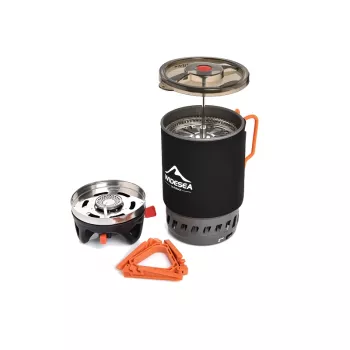
For a ready-to-use structure, the Identify Strengths and Overcome Weaknesses | Digital Self-Discovery eBook is designed to move from observations to a concrete plan without turning the process into an all-day project. And if a change of scenery helps you think more clearly, a short “reset session” outdoors can be surprisingly effective—some people pair reflection with a simple routine like making a hot drink at a campsite using a portable camping cooking system with heat exchanger and gas stove.
For learning and behavior change principles that support this kind of iterative improvement, NIH resources and research archives can be a useful starting point (browse the National Institutes of Health database).
FAQ
How long does it take to identify real strengths and weaknesses?
Plan on 60–90 minutes for an initial map, then 2–4 weeks to confirm patterns through journaling and feedback. Quarterly reviews help refine your list as roles and responsibilities change.
What if feedback from others doesn’t match how I see myself?
Ask for specific examples and note the context (team, deadline pressure, communication channel). Treat feedback as data points, then run a small experiment for two weeks to test whether a behavior change improves outcomes.
Should weaknesses always be fixed, or can they be managed?
Not every weakness needs deep repair; prioritize the ones with the biggest impact. Use build (train), bridge (tools/processes), or borrow (delegate/partner) depending on how often the weakness shows up and how costly it is.
















Leave a comment