
Large Cat Tree with Big Hammock & Scratch Posts: Guide
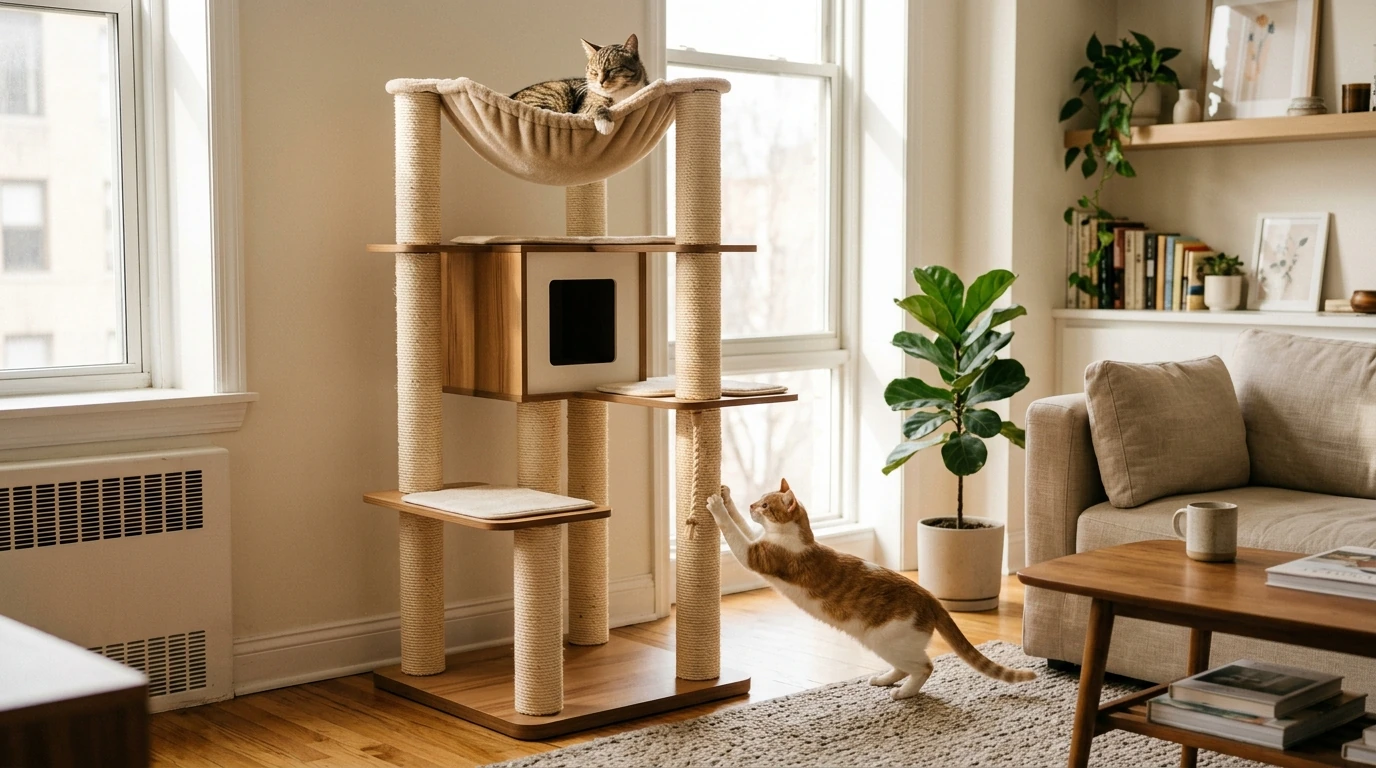
Large Cat Tree for Indoor Cats with a Super Big Hammock and Scratching Posts
A well-designed cat tree can turn an indoor space into a climbing, scratching, and lounging zone that helps reduce boredom and protects furniture. A tall indoor cat tree with a roomy hammock and sturdy scratching posts creates an “all-in-one” hangout: a place to perch and watch, a spot to nap, and a dependable surface for daily scratching. Below is what to look for, how to place it so it actually gets used, and how to keep it stable and easy to maintain.
What a cat tree should provide for indoor cats
Indoor cats thrive when the home offers choices—up high, down low, hidden, open, soft, and scratchable. The strongest cat trees combine a few essentials so your cat can rotate activities naturally throughout the day.
- Vertical territory: Multiple levels for climbing and perching, especially helpful in apartments or multi-cat homes where floor space is limited.
- Comfort zones: A deep hammock or cradle-style bed for long naps plus at least one platform for observing household activity.
- Scratch satisfaction: Posts placed where cats naturally stretch, with enough height for a full-body reach.
- Play and enrichment: Surfaces to hop between with predictable pathways so cats feel confident going up and coming down.
- A stable footprint: A wide base and balanced design to prevent wobble during jumps.
For more on enrichment concepts that support natural feline behaviors, see resources from the ASPCA and International Cat Care.
Standout features to prioritize: super hammock + scratching posts
When a cat tree includes a truly large hammock and more than one scratching post, it tends to become a daily destination rather than “that thing in the corner.” These are the details that usually make the difference.
Hammock size and depth
A larger, deeper hammock supports curled sleeping and full-body lounging for adult cats. Look for reinforced stitching and a supportive shape that cradles the body without feeling like it’s collapsing under weight.
Hammock placement
Mid-to-upper placement often becomes the favorite nap spot because it’s elevated but still feels secure. If you have a senior cat, a lower hammock (or an easy step-up route) can reduce hesitation and joint strain.
Post quantity, layout, and height
Multiple scratching posts reduce “traffic jams,” especially in multi-cat homes where one cat may otherwise guard a single post. Taller posts are often more satisfying than short stubs because they allow a full stretch—shoulders, back, and toes—while scratching.
Surface variety
Platforms, condos, and hammock fabric give cats options for temperature and pressure preferences. Some cats choose plush for naps, sisal for claw work, and a firmer platform when they want to watch the room.
Quick comparison: what to check before buying
Use this checklist to compare similar cat trees by comfort, stability, and upkeep. Aim for a balance between a large lounging area (the hammock) and enough scratching real estate to redirect claws away from sofas and rugs.
| What to check | Why it matters | What good looks like |
|---|---|---|
| Base width and weight | Reduces tipping and wobble during jumps | Wide footprint; feels steady when pushed lightly |
| Hammock capacity and stitching | Prevents sagging and tearing over time | Reinforced seams; hammock stays taut and supportive |
| Scratching post height | Encourages full-body stretching and regular use | Posts tall enough for adult cats to stretch comfortably |
| Sisal coverage | Determines how long posts last | Thick, tightly wrapped sisal with minimal gaps |
| Platform spacing | Supports safe, confident climbing | Step-like layout; no awkward leaps for everyday routes |
| Cover material | Affects shedding, cleaning, and comfort | Soft but durable fabric; easy to vacuum or spot clean |
Sizing and placement for real-life homes
The “best” cat tree can underperform if it’s squeezed into a poor location. A few simple placement choices can make the hammock the most-used seat in the house.
Materials, durability, and maintenance
Safety and stability tips (especially for energetic jumpers)
A ready option: Large Cat Tree with Super Big Hammock & Scratching Posts
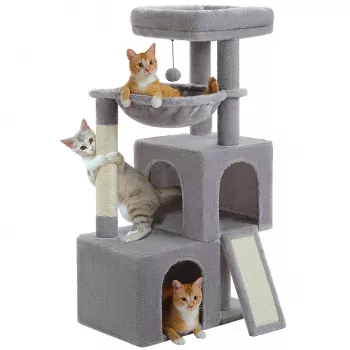
If you want one central piece that covers climbing, resting, and daily scratching, consider the Large Cat Tree for Indoor Cats with Super Big Hammock & Scratching Posts. It’s designed as an indoor hub with a roomy hammock and multiple scratching posts—useful for redirecting claws while giving cats a dedicated nap spot.
More in-stock finds
- Portable Camping Cooking System with Heat Exchanger and Gas Stove
- 925 Sterling Silver Multicolor Birthstone Clip Earrings
FAQ
How do cats use a hammock on a cat tree?
A hammock creates a cradled, secure-feeling nap spot that supports the body while keeping the cat slightly “nested.” Many cats rotate between the hammock, platforms, and any enclosed spaces depending on temperature, noise, and household activity.
How can scratching posts on a cat tree protect furniture?
Scratching posts work best when they’re sturdy, tall enough for a full stretch, and placed near the areas your cat already targets. Reward post use with praise or a small treat, and use catnip or silvervine sparingly to keep the posts more appealing than the sofa.
Where should a cat tree be placed indoors?
A stable corner near a window is often ideal, as it combines security with a great view. In multi-cat homes, choose an area with more than one approach path, and avoid tight corridors where the tree may get bumped during daily traffic.













Leave a comment