450-Piece Mechanics Kit: Standard & Deep Sockets Guide
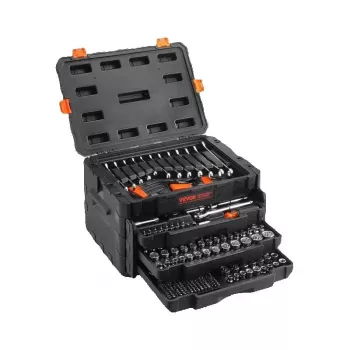
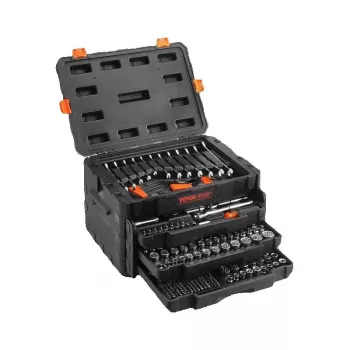
450-Piece Mechanics Tool Set with Standard and Deep Sockets
A large mechanics set can replace a drawer full of mismatched tools—especially when it includes both standard and deep sockets for tight clearances, long studs, and everyday fasteners. A well-rounded 450-piece kit is designed to handle everything from quick driveway maintenance to more involved weekend projects, while keeping the most-used sizes and accessories close at hand in one case.
If the goal is fewer mid-job interruptions, the real advantage isn’t just the piece count—it’s the combination of socket depths, multiple drive sizes, and the adapters and extensions that help you reach fasteners without resorting to awkward tool “stacks.”
What a 450-piece set helps you tackle
- Routine maintenance: battery terminals, hose clamps, skid plates, spark plug access (with the right extensions).
- Brake and suspension work: stubborn fasteners, larger hex sizes, and deep sockets for protruding threads.
- Interior and trim jobs: smaller driver bits and compact tools for confined spaces.
- Multi-vehicle coverage: having duplicate sizes and multiple drive types reduces tool swapping mid-job.
- Track-day or off-road preparedness: a single case can cover last-minute adjustments and repairs away from the shop.
For a single-kit option that’s built around the “grab one case and go” idea, consider the 450-Piece Mechanics Tool Set with Standard and Deep Sockets, which is aimed at covering common tasks without forcing you to hunt for missing adapters or specialty bits.
Standard vs. deep sockets: when each one matters
- Standard (shallow) sockets fit better where space is limited—engine bays, tight brackets, and recessed bolts.
- Deep sockets reach nuts on longer studs and can clear protruding threads without bottoming out.
- Deep sockets can reduce rounding in some scenarios by allowing better engagement on exposed fasteners (when correctly sized).
- Pairing both depths reduces the temptation to stack extensions or use an ill-fitting alternative.
- For corroded or high-torque fasteners, match the socket depth to the access path so the ratchet stays straight and stable.
Quick chooser: standard vs. deep sockets
| Task | Better choice | Why it helps |
|---|---|---|
| Tight clearance around a bolt head | Standard socket | Shorter profile fits between components |
| Nut on a long stud | Deep socket | Reaches the nut without bottoming out |
| Fastener recessed inside a pocket | Standard socket | Less wobble and more direct torque transfer |
| Exposed threads with limited side access | Deep socket | Allows engagement without forcing an angled approach |
| Working with extensions in an engine bay | Either (match access) | Correct depth reduces tool stack-up and flex |
Key components to look for inside a large mechanics tool set
- Ratchets in common drive sizes: look for comfortable handle shapes, smooth direction switches, and positive engagement.
- Sockets in a broad range: both metric and SAE coverage is useful for mixed fleets and older equipment.
- Extensions and adapters: essential for reaching behind accessories, under intake runners, or into wheel wells.
- Universal joints or wobble accessories: helpful for angled access, but best used with controlled torque to avoid rounding.
- Bits and drivers: a deep selection can reduce separate purchases for interior work, small fasteners, and general assembly.
- Hex keys and specialty pieces: often the difference between finishing a job today versus stopping for a single tool.
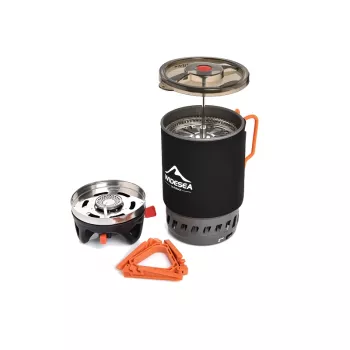
For anyone who keeps a kit in the vehicle for long drives or trail days, it can also help to pack a compact comfort item for longer stops. The portable camping cooking system with heat exchanger and gas stove can pair well with a travel tool case for situations where repairs and downtime overlap—especially in colder weather.
Fit, durability, and finish: what affects real-world performance
- Socket fit: a precise fit reduces slop and helps prevent rounding, especially on worn fasteners.
- Material and heat treatment: stronger alloys and proper hardening improve longevity under repeated high torque.
- Corrosion resistance: plated or coated finishes can help in humid garages and roadside environments.
- Ratchet mechanism quality: finer tooth counts can be useful where swing arc is limited, but overall robustness matters most.
- Case design: labeled positions and solid hinges/latches reduce lost pieces and keep the set portable.
- Warranty and replacement: check availability of individual replacements for commonly lost items (bits, adapters).
Safe, predictable tool use also comes down to fundamentals: using the right tool for the job, keeping tools in serviceable condition, and avoiding compromised hand tools. For general best practices, OSHA’s guidance on hand and power tools is a solid reference: OSHA Hand and Power Tools – General Requirements. For standards and technical context across automotive fasteners and service considerations, see SAE International.
How to use standard and deep sockets safely and effectively
Organization and upkeep: keeping a 450-piece set complete
FAQ
Are deep sockets better than standard sockets?
Neither is universally better. Deep sockets are ideal for nuts on long studs and protruding threads, while standard sockets are better for tight clearances and recessed fasteners. Having both prevents awkward tool setups that increase slip and rounding risk.
Does a large mechanics set include both metric and SAE sizes?
Many large sets include a mix of metric and SAE sockets and bits, but it varies by kit. Confirm the included size ranges and drive types so they match the vehicles and equipment being serviced.
What drive sizes should a home garage tool set cover?
A flexible home set typically covers smaller drive sizes for light fasteners and a larger drive for higher-torque jobs like brakes and suspension. Multiple drives plus adapters and extensions reduce the need to switch tools mid-task.















Leave a comment